
Nepal-China floods kill more than 1,000 as rescue efforts continue
By Natalie Omondi
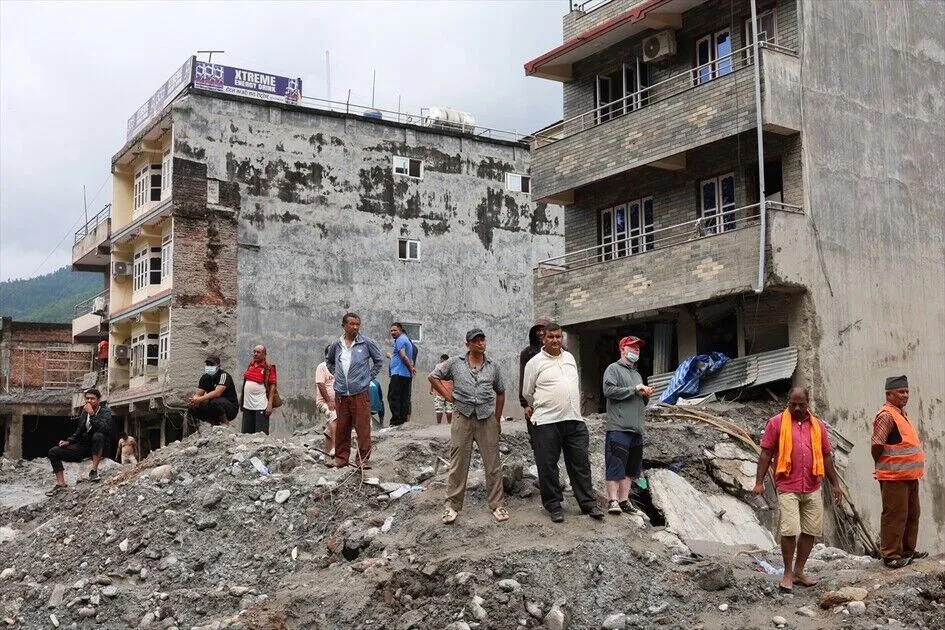
The death toll from devastating floods in Nepal and China has risen above 1,000, as rescue teams continue searching for people missing in remote areas.
Nepal’s disaster agency said 987 people had died by Tuesday, while 3,916 others were missing. The missing include 583 foreigners.
Chinese authorities had reported 16 deaths and 546 people missing in their latest update on Sunday. Of those missing, 261 are foreigners.
Nepalese authorities said at least 11,814 people had been rescued. Helicopters and other aircraft are being used to reach communities cut off after floods and landslides destroyed roads and bridges.
The disaster began on August 26 after a glacial collapse in the Himalayas sent rock, ice and meltwater into valleys below. Scientists studying satellite images said the collapse appeared to involve bedrock beneath a glacier and was strong enough to register as a magnitude 5.2 seismic event. Water and debris then rushed into rivers flowing through Tibet and Nepal. The floods swept away homes, roads, bridges and buildings, leaving mud and rocks along their path.
Rescue teams are still looking for thousands of people. A major concern is at least 900 workers missing from 12 hydropower projects affected by the floods. About 500 are believed to be trapped inside tunnels.
Nepal Army teams, assisted by foreign experts, are working at several hydropower sites to reach people in blocked tunnels. Army footage showed rescuers moving through dark tunnels filled with mud, water and debris.
Helicopter pilot Bimal Sharma, who has been flying rescue missions since the disaster began, said he was shocked by the destruction in Timure, a town near the Tibet border. “It felt like I was flying over an entirely different landscape,” he said. Sharma said he had not had much time to speak to those rescued, but their faces showed the impact of the disaster. “I can see the pain in their eyes. It’s heartbreaking,” he said.
On the Chinese side, rescue teams are working in areas hit by mudslides, especially around the Gyirong Port border crossing, which was completely destroyed.
Some teams are using search dogs to look for survivors among rocks and debris, while others are using heavy machinery to reopen the main road leading to Gyirong Port so that equipment, workers and supplies can reach the affected area.
