
Chinese firm starts mass production of laser mosquito-control device
By Natalie Omondi
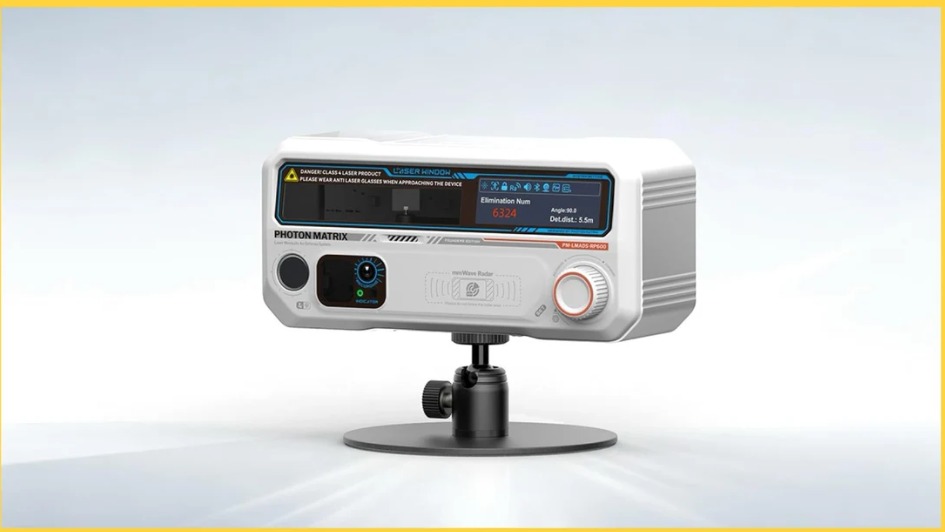
The device, known as Photon Matrix, was developed by Photon Matrix Lab. The company expects to ship the first batch of units in late August 2026. Photon Matrix uses LiDAR, millimetre-wave radar, AI vision and a precision laser to detect and track mosquitoes and other small flying insects before targeting them.
The device is different from some mosquito-finding products because it is designed to eliminate insects using a laser. The Israeli-made Bzigo Iris, for example, uses computer vision to locate mosquitoes and marks their position with a low-intensity laser.
Photon Matrix is available in infrared and blue-laser versions through the company’s online store.
The launch comes as China’s mosquito-control market grows. The market is projected to increase from 7.86 billion yuan in 2025 to 12.43 billion yuan by 2030.
Companies have also been testing automated ways of controlling mosquitoes. During the 2023 Hangzhou Asian Games, smart robots that copied human body temperature and breathing were used to attract and trap mosquitoes with carbon dioxide or ultraviolet light.
The performance claims for Photon Matrix have not yet been independently tested. The developer says it will provide more testing results and safety information.
Its success will depend on safety, effectiveness, reliability and price. Conventional chemical repellents and traps are still widely used.
