
The Hands That Lifted The Bodies:The Forgotten Helpers
By Lucy Muoki-MKU Student
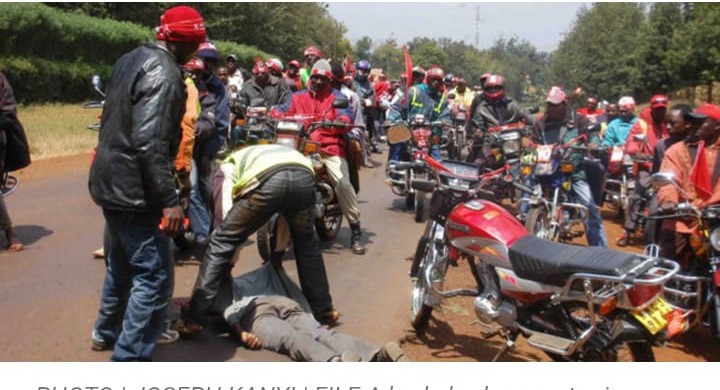
It’s barely a week since the accident happened on Sunday, October 25, at Kanga, ten kilometres past Mtito Andei on the Nairobi-Mombasa highway. The news of a bus colliding with trailer hit the headlines on social media and all main media platforms.
The details of the bus and the trailers only emerged later but before then there were responders on site not concerned about the name of the bus and the details of the trailer but just to help. I watched a graphic video clip on my phone of police and helpers lifting bodies, some in parts to their car. Those images remained in my mind for a while and kept me thinking.
By now we all know the bus was carrying mourners back to Mombasa after a funeral in Western Kenya. We now know that 22 people died on the spot. By nightfall, two more people succumbed and the number became 24. Scores of others were admitted in the nearby hospitals. When the reporters visited them at the hospital to gather more information of what happened before and after the accident. I listened to one Violet Mwandonyi, a mother of two who survived, she said they could only remember wailing and begging passing motorists to help.
This happened in less than a month on that same stretch; on October 3rd, seventeen pilgrims from St. Mathias Mulumba Parish in Mikindani died at Salama. There have been several accidents across the country and this two are not isolated cases but just case examples.
The reports happen of the accidents and all we see sometimes is the government offering to support with the funeral expenses to the families affected. That’s happens and the deceased are laid to rest and the families begin the journey of healing. Sometimes the focus can be on the failure of government bodies such as police and NTSA and call to drivers to be careful on the road. We rarely ask what happens to those who ran towards the wreckage.
The first responders to Kanga were not ambulances.
In almost every accident that happens the first people who get to the scene are boda boda riders, drivers whose vehicles were behind, and motorists. Those became rescuers by accident. When police come and other para-medics, they join forces in rescuing and they become one team of rescuers. The survivors are rushed to the hospitals while the dead to the morgue and their families informed.
The first responders, the police and even the on lookers will eventually leave the scene. The wreckage is pulled to the police station, and all that remains there is broken glasses and trash a sign of an accident that had happened. The assumptions from everyone are that the helpers will go on with their daily activities and that happens sometimes but we rarely do we ask how are they doing it with what they just experienced.
The truth is that they carry that home, at work and on and on.
The boda boda rider who lifts that body to the police car or the survivor to the ambulance to rush him/her to hospital often struggles to work that day. The scene often replays at night. He cannot sleep. The divers who stop to help and other have to make carry the survivors in their cars to the hospitals and other fear to do so spends weeks asking themselves whether they made the right decision.
There is nothing wrong with this and neither is it weakness. It is the cost of exposure to sudden, violent death.
Risper Onchomba a paramedic in Nairobi, recently said, “People think because we stay calm during emergencies, we are somehow immune to trauma. That is not true.” In cases of mass casualties, responders shift their focus from saving one life to saving as many as possible. It is a painful, objective choice. Later, they ask themselves if they did enough and to others the images of what they say keep replaying in their minds long after everything has happened.
For police officers who spend hours retrieving bodies, documenting scenes and sometimes in the scorching sun and controlling grieving crowds, there is often no debrief at all or support available. And if another accident happens, they will be often are sent again. For the eye-witnesses and good Samaritans who used their cars as ambulances, there is no follow-up. They drive away changed, flinching at every oncoming car or the one that overtakes them.
In a conversation with Licensed Counseling psychologist Shadrack Kyove in Nairobi, he pointed out that trauma is invisible because we do not screen for it. He added that up to 75 percent of those who need care cannot access it. First responders fall through the same crack.
Then what should we do to care for the helpers, we must make support visible and normal.
First, psychological first aid must be made available at the majority of the crash scene if not all. This can be possible by training the boda boda riders, public transport drivers and the truck driver who often find themselves at the scene of the accidents.
This training can also include first aid training to help them understand how to support in cases where the ambulance or police take long to arrive at the scene.
The Second thing is we must make use the tools we already have. The Kenya Red Cross runs a free, confidential toll-free line 1199, and a mental health chatbot accessible on WhatsApp, Telegram and USSD _789_1199#. It screens for anxiety, depression and PTSD in English and Kiswahili. It was built for exactly this — for the boda rider, the driver, the witness who cannot afford a private clinic.
Thirdly, let us respect the 72-hour window. For anyone exposed to a fatal crash talk about what you saw within three days to one safe person — not formal therapy, just telling the story of what you saw and how it made you feel. Keeping it inside makes it replay. If after two weeks you still cannot sleep, feel detached, or are drinking more to cope, seek help from any government hospital or any professional counselor.
Finally, creating the awareness across the transport sector of the impact of such exposure to their staff and stakeholders on mental health. As we talk about prevention of accidents, we should not forget to create the awareness to the public also and the impact that has.
If you helped at an accident scene and still carry that scene with you, you deserve care too. You carried someone that day. Find help and let someone carry what you have been carrying.
