
Colombia turns to recovery as earthquake rescue efforts wind down
By Natalie Omondi
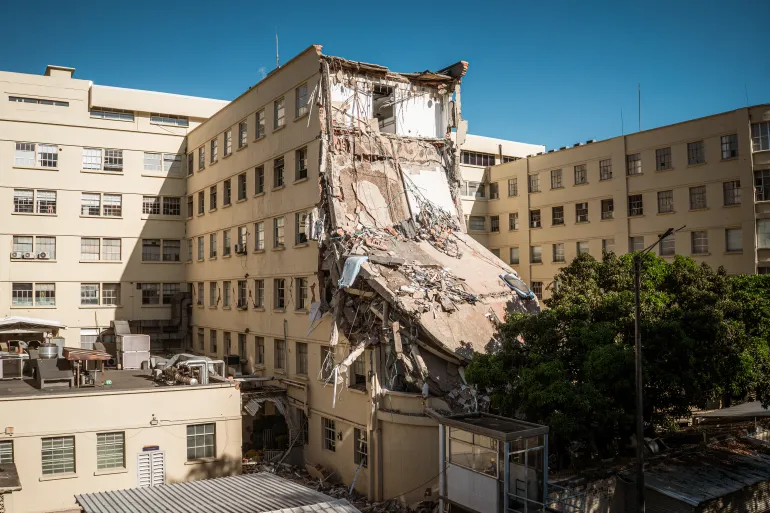
Colombia is moving into a new phase of disaster response one week after a magnitude 7.4 earthquake struck the western part of the country, killing at least 289 people and injuring 4,187.
Rescue teams are scaling down operations as the chances of finding survivors under the rubble continue to fall. Aid organisations and authorities are now turning their attention to shelter, basic supplies and the reconstruction of areas affected by the earthquake.
The earthquake strikes San Jose del Palmar in Colombia’s Pacific region and affects 15 of the country’s 32 provinces, with cities including Cali, Pereira and Quibdo suffering extensive damage.
Government figures show that 127,557 homes are damaged while 26,945 are destroyed. The disaster also affects 285 health centres and 2,838 educational facilities.
Roads, bridges and other infrastructure are also badly damaged, with 407 roads, 92 water supply systems, 44 vehicular bridges and five airports affected.
Emergency response teams have rescued 354 people during the past week. However, 143 people remain unaccounted for, according to government figures. An unofficial online database, Colombia Te Busca, puts the number of missing people at more than 3,000.
Sergeant Joel Bustamente, who leads the Bogota Fire Department’s deployment in Cali, says rescue teams have had a difficult week as they continue searching for possible survivors.
“It has been a gruelling week, with little time to rest, as we’ve been focused on searching for, locating, and rescuing potential victims,” said Sergeant Joel Bustamente.
Bustamente says the chances of finding people alive under the rubble have dropped significantly, with rescue operations now giving way to demolition, reconstruction and other recovery activities.
“Certain search-and-rescue operations are no longer necessary, and we have now moved on to a phase in which reconstruction, demolition, and other types of operations… will begin,” said Bustamente.
At the seven-storey Vanessa Building in Cali, search and rescue operations have been suspended, with teams now concentrating on recovering bodies.
“Search and rescue operations have been suspended since Friday. They are now in the phase of recovering bodies,” said Enrique Zapata, head of logistics at Cali-based health NGO SARES.
Despite the declining chances of survival, some rescuers continue to hold on to hope. Volunteer rescuer Maximiliano Herrera says teams continue working, with international rescue teams from Israel, the United States and Mexico joining the response.
“We never lose hope,” said Maximiliano Herrera, a volunteer rescuer in Cali.
The focus is now increasingly shifting towards providing shelter for more than 120,000 families affected by the earthquake.
“In terms of long-term continuity or a medium-term response, the priority right now is clearly shelter and refuge,” said Egido Sanz, country director for Colombia at ActionAid.
In Cali and Pereira, sports stadiums and community centres are being converted into temporary shelters. Aid centres are collecting and distributing food, water, hygiene supplies and clothes to affected families.
However, aid organisations say some of the hardest-hit areas remain in need of urgent assistance.
Choco, Colombia’s poorest department and the earthquake’s epicentre, is facing the disaster on top of existing challenges involving armed conflict, drug trafficking and illegal gold mining.
In Quibdo, 2,723 homes are damaged, with 1,337 now considered uninhabitable. Residents say the national government has been slow to provide temporary and permanent shelters.
“There has been no institutional response at the national level regarding the construction of temporary or permanent shelters,” said Yilson Marmolejo, a Quibdo local.
The earthquake is also leaving businesses struggling to recover. In Buenaventura, bicycle shop owner Nestor Martinez estimates that the damage to his business amounts to approximately 350 million pesos, or $111,000.
“You have to scrape together money wherever you can to get back on your feet,” he said.
International assistance is already coming in, with the European Union pledging 2 million euros and the United States providing $15.5 million.
The government estimates that reconstruction will cost at least $6.4bn. President Abelardo de la Espriella has declared an economic emergency and pledged a reconstruction fund, while the government is also relying on a $450m World Bank credit line.
As Colombia begins the difficult process of rebuilding, emergency responders continue to search through the rubble in the hope of finding survivors.
“The search for survivors continues; there’s always the possibility of miracles,” said Sergeant Bustamente.
