
Kenya targets foreign-run small businesses
By Natalie Omondi
The government has started moving against foreign nationals operating small shops and hawking businesses in Kenya.
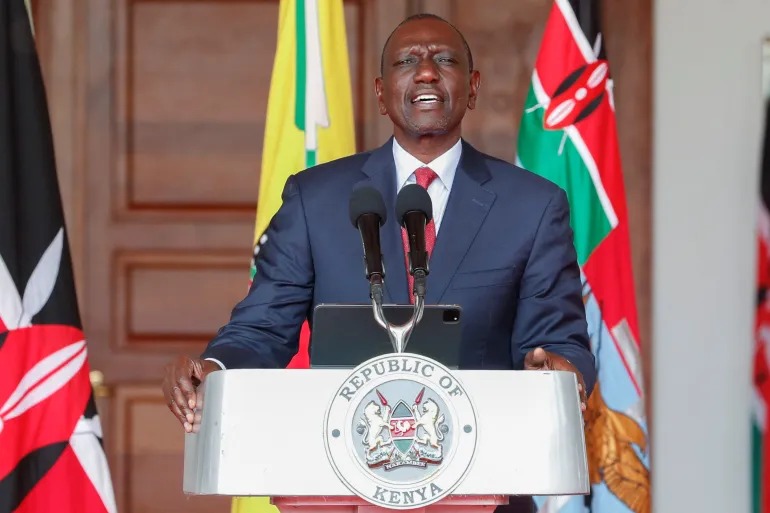
President William Ruto gave the directive on September 2 during a meeting with small traders at State House. He said small-scale businesses should be left to Kenyans, while foreign investors should focus on areas that need more capital.
The crackdown began on September 7. The government says it will use administrative measures as Parliament continues to consider the Local Content Bill, 2025. President Ruto also asked National Assembly Majority Leader Kimani Ichung’wah and Trade Cabinet Secretary Lee Kinyanjui to push for the bill to be passed quickly.
The proposed law would require foreign companies to use more local goods and employ more Kenyans. It has not yet been passed by Parliament. Hesbon Hansen Owilla, a professor at Aga Khan University in Nairobi, said the policy would protect local traders.
“Yes, this is the best way to protect Kenyan small businesses and traders,” he said. “Kenya is trying to bring in only investors who are bringing capital that can spur economic development by creating jobs rather than allow small-time foreign traders who only stifle Kenyan small traders while enjoying the robust infrastructure that Kenya has built and social securities.” “It’s like expatriates. A country cannot allow expatriates in for jobs locals have expertise in,” he added.
The directive is aimed at foreign nationals running small retail businesses and hawking. The government has not given a full list of affected businesses or said how many people will be affected.
President Ruto also directed Kimani Ichung’wah to work with immigration officials on the rules for permits issued to foreign investors and traders. It is still unclear how the directive will affect foreigners who already have permits.
Foreign Affairs Principal Secretary Korir Sing’Oei said foreigners with the required permits and licences remain protected to run businesses in Kenya. He said Ruto’s remarks were taken out of context and were linked to the Local Content Bill.
Foreign direct investment in Kenya stood at Sh1.458 trillion at the end of 2023, according to the 2024 Foreign Investment Survey. Foreign-invested companies employed 224,769 people in June 2024, including 221,267 Kenyans.
The dispute involving Tata Chemicals Magadi is separate from the action against small foreign traders. The government suspended its mining operations on July 28 over alleged compliance issues, affecting soda ash exports.
On September 3, President William Ruto said Tata Chemicals should leave Kenya because it had not brought enough benefit to Kajiado. He said the government would bring in two companies to establish glass and chemical factories in the area. Tata Chemicals said it had provided the information requested by the government and was waiting for further communication.
Business consultant Solomon Kinyanjui said foreign investment should support Kenyan businesses rather than replace them. “The issue is not whether foreign capital is welcome, but what role it should play in Kenya’s economy,” he stated. “Foreign investment should complement Kenyan enterprise, not substitute for economic activities Kenyans can competitively undertake themselves.”
Journalist Hafsa Abdiwahab Sheikh said the policy could help or hurt, depending on how it is carried out. “The policy could create more jobs for Kenyans and encourage skills transfer, while helping protect local employment,” she said.
“However, if implemented unpredictably, it may discourage foreign investment and increase business costs, leading to higher prices. It could also affect relations with foreign communities if foreigners are blamed for unemployment.”
